What pre-application advice is
Government planning guidance describes pre-application engagement as a collaborative process between a prospective applicant and other parties, including the council, and says it offers significant potential to improve both the efficiency and effectiveness of the planning system. In practice, you send the council a description of what you want to build, with drawings, and an officer replies with their view, either in writing or after a meeting or site visit.
According to the same guidance, good pre-application discussion can help you understand which policies apply, resolve issues early, discuss mitigation and possible conditions, and work out what information the application will need, which reduces the likelihood of delays at the validation stage.
Is it compulsory?
No. The National Planning Policy Framework (paragraph 40) says councils cannot require a developer to engage with them before submitting a planning application, but they should encourage take-up of any pre-application services they offer. Government guidance adds that the level of engagement should be proportionate to the nature and scale of the proposal. For most householder projects it is a choice, not a step you have to take.
What it costs
Councils can charge for pre-application advice as a discretionary service. Government guidance says charges must not exceed the cost of providing the service, and that, where possible, councils are strongly encouraged to provide at least a basic level of service without charge. The Planning Portal also notes that local authorities may charge a fee for pre-application advice.
Because each council sets its own charges, the difference between areas is large. Two examples from published 2026 to 2027 fee schedules for householder advice:
- Birmingham City Council: £166.80 for written advice only, or £332.40 if a meeting is requested (both including VAT).
- Lambeth Council: £491.00 for written advice only, £820.46 with a site visit or meeting, and £984.88 where the property is in a conservation area or is a locally listed or listed building (all including VAT).
Always check your own council's current schedule before you budget. Pre-application fees are separate from the planning application fee itself, which we cover in our guide to planning permission costs.
How long it takes
Response times also vary. Lambeth's guide, for example, gives an initial acknowledgement within 5 days and an estimated response within 35 days for householder requests. Add that time to your overall programme: if you use pre-application advice, the formal application comes after it, not alongside it.
What the advice cannot do
Pre-application advice is not a decision. Government guidance states that it cannot pre-empt the democratic decision-making process or a particular outcome, although the advice could be a material consideration when the application is decided. Lambeth's guide says the same in its own words: officer advice does not constitute a formal decision of the council and cannot bind it when it validates or determines a later application.
So a positive response lowers the risk, but it does not guarantee approval: the formal application is still assessed and decided in the usual way. A negative response is just as useful, because it tells you what to change before you pay the application fee.
When we think it is worth it
When clients ask us whether to pay for pre-application advice, the recommendation usually depends on how open the main question is. Where we suggest it, it is usually for schemes where the principle is in doubt, such as a new home on a rural plot, a site on the edge of a village or in the Green Belt, a change of use, or work in a conservation area. In those cases, an early view on whether the council will accept the idea at all can save the cost of a full set of drawings and an application that was never going to succeed.
It can also help after a refusal, where the reasons are open to interpretation and you want to test a revised design before submitting again.
When you can often skip it
For a modest rear or side extension that follows your council's householder design guidance, a written pre-application response often tells you little that a careful check of local policy would not. If the work may not need planning permission at all, a lawful development certificate gives you a formal decision from the council on whether the work is lawful, instead of an informal view. And if time matters, the weeks spent waiting for advice may be better spent on a well-prepared householder planning application.
How to get useful advice
The guidance describes the process as two-way: you do not have to provide everything a full application needs, but you do need to give the council enough to take an informed view. In our experience the responses are most useful when the request includes:
- a clear site location plan and photographs of the property and its neighbours;
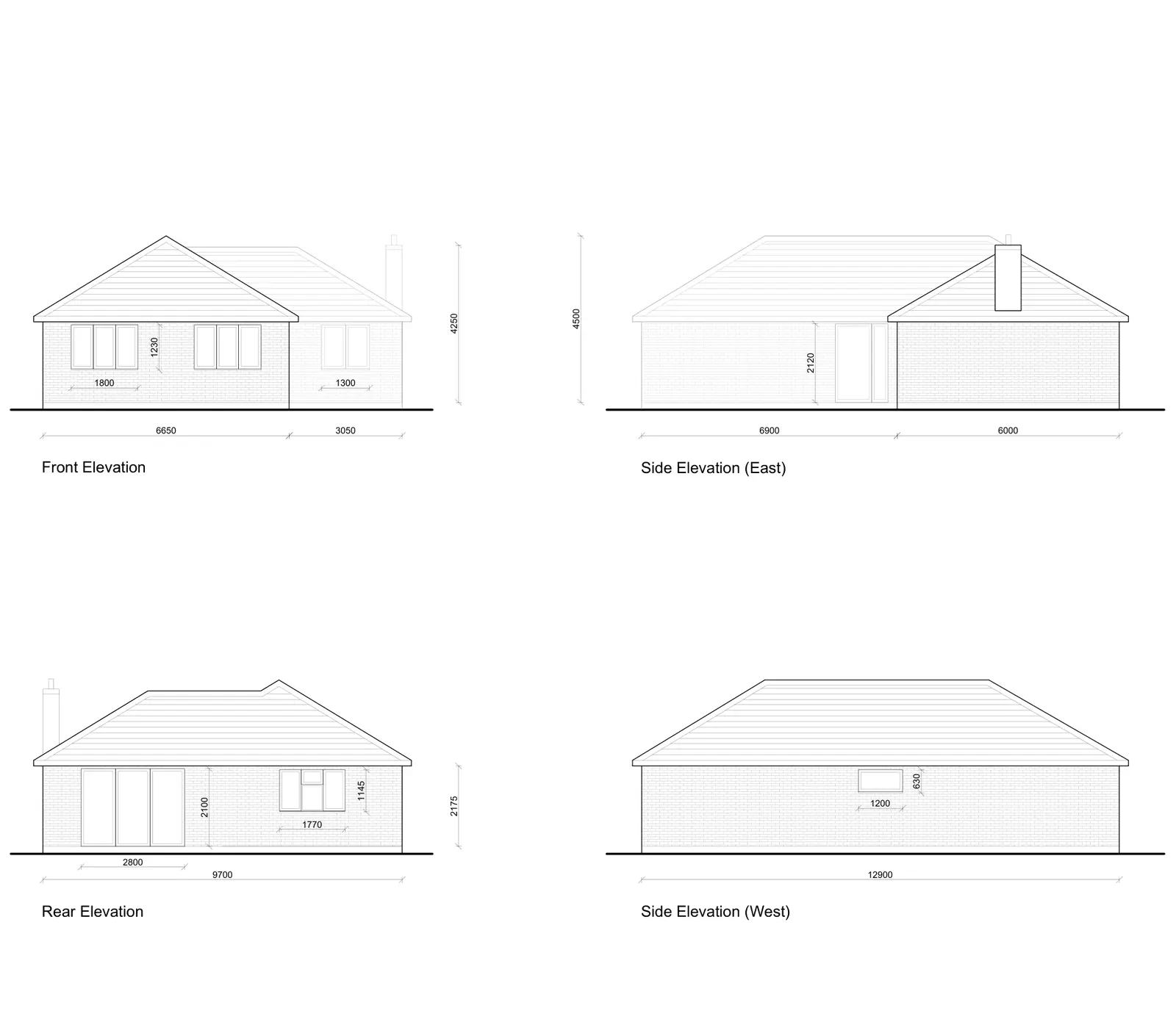
- existing and proposed drawings, even if the design is not final;
- a short statement explaining what you want to build and how it responds to local policy;
- specific questions, such as whether a two-storey side extension would be acceptable or how far a rear extension could project.
Vague requests tend to get vague answers. Specific questions get answers you can act on.
Should you use a consultant?
You can request pre-application advice yourself. Some people use a planning consultant to prepare the drawings and statement and to interpret the response, particularly on more complex sites. Either way, read the response carefully and treat it as guidance on what to change, not as a promise.
Frequently asked questions
Is pre-application advice binding?
No. Government guidance says it cannot pre-empt the council's decision, although it can be a material consideration when the application is decided.
Do I have to get pre-application advice before applying?
No. The National Planning Policy Framework says councils cannot require it, though they should encourage people to use their pre-application services.
How much does pre-application advice cost?
It depends on the council. For householder advice in 2026 to 2027, Birmingham charges £166.80 for written advice and Lambeth charges £491.00, rising with meetings, site visits or heritage designations.
Is pre-application advice worth it for a small extension?
Often not, if the design clearly follows your council's guidance. It tends to be more useful where the principle of the scheme is uncertain.
Not sure whether your project needs pre-application advice? Book a free advice call and we will talk it through with you.