Home >Blog >Replacing Windows in a Conservation Area: The Rules
Replacing Windows in a Conservation Area: The Rules
BeforeBricks Marketing Team
•
If you live in a house in a conservation area, you can usually replace your windows without planning permission as long as the new ones look similar to the existing ones, unless your council has made an Article 4 direction that removes that right. Listed buildings are different: changing windows that affect the building's character needs listed building consent. Flats are different again, because the permitted development rights for houses do not apply to them.
So the answer depends on four questions, and they are worth settling in order before you sign a window company's quote. We go through each one below, with the legal tests behind them and what we ask for before we advise.
The starting point: houses and permitted development
For houses, replacing windows usually falls under permitted development, the national rights set out in the General Permitted Development Order 2015. Class A of Part 1 covers "the enlargement, improvement or other alteration of a dwellinghouse", and its conditions cover windows directly.
The condition that matters most is A.3(a): the materials used in any exterior work must be of a similar appearance to those used on the exterior of the existing house. The Planning Portal puts it the same way, saying you usually do not need planning permission for new windows and doors that look similar to those already used on the house.
Two other rules catch people out:
- Bay windows. The Planning Portal says a new bay window will be treated as an extension and may need permission, so it is judged against the extension rules, not as a like-for-like swap.
- Upper-floor side windows. Under condition A.3(b), any upper-floor window in a side wall or side roof slope must be obscure-glazed, and non-opening unless the parts that open are more than 1.7 metres above the floor of the room.
Do you need planning permission to replace windows in a conservation area?
Not automatically. Class A has extra limits for conservation areas and other protected land (paragraph A.2), but they cover cladding, side extensions and multi-storey rear extensions. Windows are not on that list, so being in a conservation area does not, on its own, take away the right to replace windows on a house.
What often does take it away is an Article 4 direction. GOV.UK explains that an Article 4 direction means a particular development cannot be carried out under permitted development, so it needs a planning application instead. Historic England notes that being in a conservation area might mean your house is affected by these controls, and that they restrict work you can normally do without permission, such as replacing a door or window.
How to check for an Article 4 direction
Historic England's advice is to contact your local planning authority, both to find out whether you live in a conservation area and whether an Article 4 direction applies to your area. These controls are tailored to each area by the council, so if there is a direction, ask for the document itself and read which works it covers, rather than assuming it does or does not cover your windows.
Can I put uPVC windows in a conservation area?
If no Article 4 direction applies, the question is whether the new windows meet the similar appearance condition. That is a judgement, not a fixed list of allowed materials. Swapping painted timber sashes for uPVC casements with a different opening pattern is much harder to argue as similar than replacing like for like. Where there is real doubt, you can ask the council for a lawful development certificate to confirm the position before you spend the money.
Listed buildings: listed building consent
If the building is listed, permitted development is not the test. Section 7 of the Planning (Listed Buildings and Conservation Areas) Act 1990 says no one may alter a listed building in any manner which would affect its character as a building of special architectural or historic interest unless the works are authorised. The Planning Portal's summary is that you will need listed building consent for any significant works.
Getting this wrong can be a criminal matter. Under section 9 of the same Act, a person who contravenes section 7 is guilty of an offence, punishable on summary conviction by up to six months' imprisonment, a fine, or both, and on conviction on indictment by up to two years' imprisonment, a fine, or both.
Flats and maisonettes
The Planning Portal is clear that the permitted development rights which apply to many common projects for houses do not apply to flats. If you own a flat, including one in a converted period house, ask the council whether new windows that change the external appearance need a planning application, and check your lease as well, as the Planning Portal notes that leaseholders may need permission from the landlord or management company first.
Building regulations still apply
Separately from planning, the Planning Portal states that since 1 April 2002 building regulations have applied to all replacement glazing. In practice that means:
- Who signs it off. An installer registered with a competent person scheme can do the work without involving building control, and you get a certificate when the work is complete. If you use an unregistered installer, a building control body can check the work and issue a certificate of compliance.
- Energy efficiency. New windows must not exceed the U-value limits in Approved Document L.
- Safety glazing is needed in critical areas, such as any panel up to 800mm from floor level and any glazed door up to 1500mm from floor level.
- Means of escape. Where a window is an escape route, the new opening should give at least the same potential for escape as the one it replaces.
If you are in a conservation area, ask your window company how their product meets both the building regulations and the similar appearance test before you order.
What we ask for before we advise
When people ask us about replacing windows, the first things we settle are whether the building is listed, whether it sits in a conservation area with an Article 4 direction, and whether the new windows will match the old. A few photos of each window from outside, plus the quote from the window company, is usually enough for us to confirm the right route.
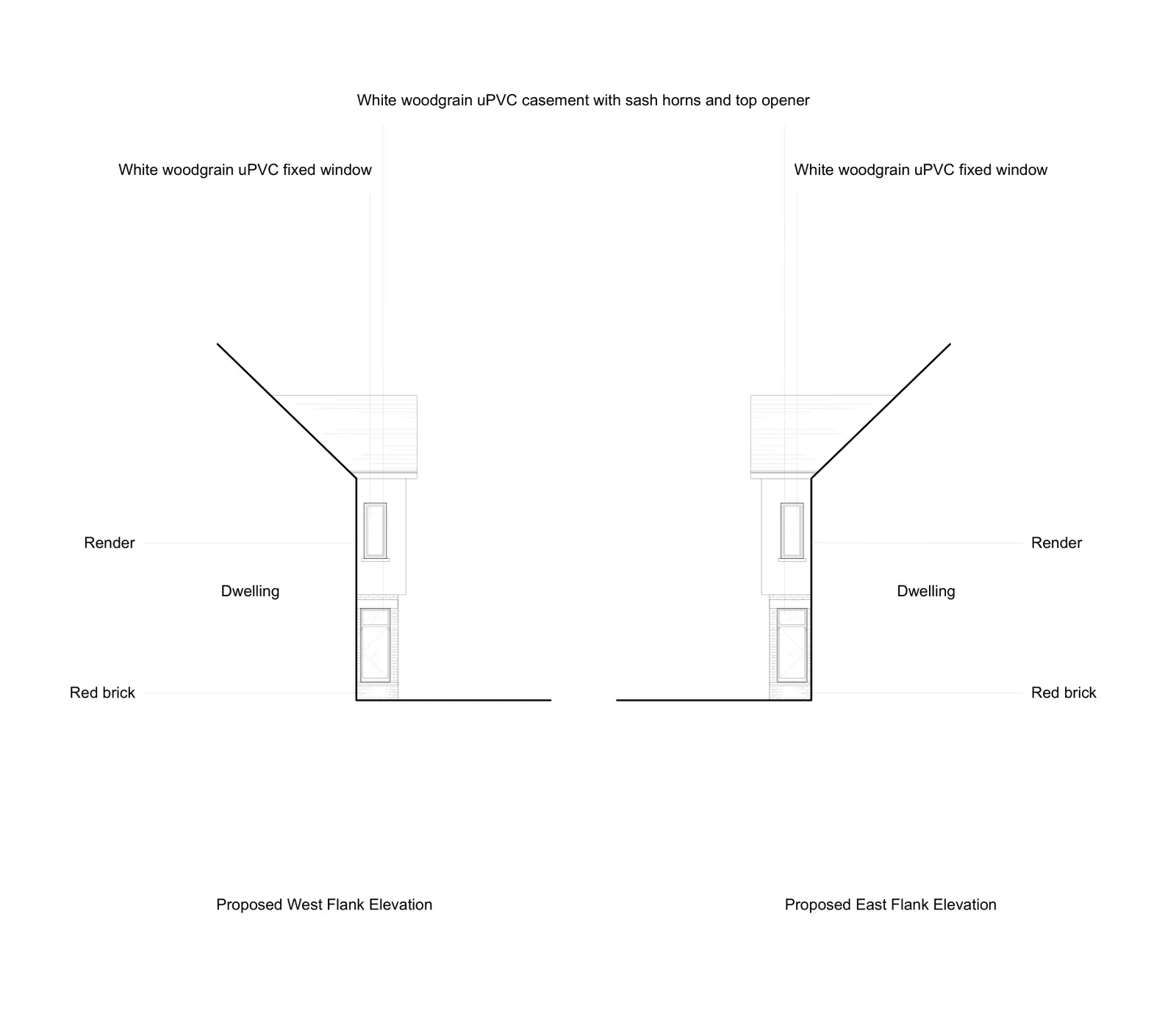
Where listed building consent is needed, the application we prepare shows the existing and proposed elevations of each window with joinery sections, together with a heritage statement.
Frequently asked questions
Do I need planning permission to replace windows in a conservation area?
For a house, usually not, provided the new windows are of a similar appearance to the existing ones and no Article 4 direction removes the right. Listed buildings need listed building consent for works that would affect their character, and the permitted development rights for houses do not apply to flats.
What happens if I replace windows without the permission I needed?
For an unlisted house, you may be able to apply for retrospective planning permission. For a listed building, carrying out works that affect its character without authorisation is a criminal offence under section 9 of the 1990 Act.
Does a conservation area affect my doors too?
The same similar appearance condition applies to doors, and Historic England gives replacing a door as an example of work an Article 4 direction can bring under control. For a wider look at what usually does not need an application, see our guide to what you can build without planning permission.
Not sure which route applies?
If you send us a few photos and tell us where the property is, we can tell you whether you need nothing, a lawful development certificate, a planning application or listed building consent. Book a free advice call and we will talk it through.